Electro Oxidation Refinery Wastewater Treatment Project With Sinopec Changling Branch
In this case study and project overview, we share data and information about a project that utilizing electro oxidation technology to conducting refinery wastewater treatment, it’s a project designed and installed back in 2023, Boromond engineers present this project to celebrate smooth operation for the last two years.
We hope this content help you to get a better comprehension of composition, challenges, and possible solution when it comes to on-site treatment of refinery wastewater by sharing treatment objectives, results and removal rate of major monitoring parameters, and targeted pollutant before and after electro oxidation wastewater treatment technology was adopted, and hope that data and information from this specific project could in help you out with selecting the technology fits you when it comes to refinery wastewater treatment.
Wastewater Type: Refinery Wastewater
Operation: Dec. 2023
Treatment Goal: Wastewater generated from the refinery processes are with a huge amount of complex organic compounds, including remaining raw materials, finished products, byproducts, solvents, and catalysts, therefore it’s critical to remove recalcitrant organic pollutants, our team was asked to offer electro oxidation wastewater treatment solutions mainly covered engineering design, deployments, and installation, followed by setting standards for daily operation and maintenances, to realize on-site refinery wastewater treatment.
Exploring New Refinery Wastewater Treatment Approaches & Utilizing Electro Oxidation
1 Client Overview of Refinery Wastewater Treatment Project With Sinopec Changling Branch
Sinopec Changling Branch is an abbreviation of the Sinopec Changling Refining & Chemical Co., Ltd. and Hunan Petrochemical, it’s a branch of Sinopec, or China Petroleum & Chemical Corporation, one of the world’s largest integrated energy and chemical companies, and business operation covering include oil and gas exploration, refining, petrochemicals, and marketing.
The refinery is part of the Yueyang Green Chemical High-tech Industrial Development Zone, formerly provincial-level industrial park named Yunxi Industrial Park, in Yueyang county, Yueyang is a key port city located on the Yangtze River and Dongting Lake, providing crucial access to major inland waterways and national infrastructure.
In China, national energy strategy involves a mix of domestic production (primarily from fields in the northeast and north-central regions, such as Daqing and Changqing, and offshore fields) and substantial imports to ensure energy security and meet the country’s vast energy demands. Refineries are built in strategic locations across the country, not exclusively at the source of crude oil extraction, strategic location of Yueyang city allows for efficient transportation of large volumes of imported crude oil (often seaborne imports arriving at coastal ports and then transferred via pipeline or other transport) and the distribution of refined products to the surrounding central China region.
Sinopec Changling Branch is one of the major six onshore refinery complex constructed and operate in different statistical regions, Sinopec Changling’s petrochemical processes mainly manufacture Propylene, polypropylene (PP), propylene oxide, BTX (benzene, toluene, xylene mixture), and acetic ester, 3-Ethoxypropionic Acid Ethyl Ester, Isobutyl Isobutyrate and etc.
And their product line and company-owned brands available within the markets are: FCC catalyst series, hydrotreating, hydrofining and hydrocracking series, medium- and low-pressure semi-regenerative catalytic reforming catalysts of CB series, aromatic hydrocarbon adsorbents, chemical and oil refining additive series.
Environmental Impact Management initiatives and Health, Safety, Environment (HSE) officers with Sinopec Changling Branch reached out to Boromond team after some search on the search engines, their target is clear, that is to find out if innovative electro oxidation technology can be utilized for on-site refinery wastewater treatment, that to degrade and eventually remove all the primary and secondary organic pollutants.
Basic Information About Sinopec Changling Refinery Wastewater Treatment Project
Industry: Refinery (aromatic hydrocarbons)
Location: Yueyang, Hunan, China
Composition Type: Extremely high COD, bio-refractory organics, speical phenols, ester, benzene derivatives
To degrade the diverse pollutants produced in the production process:
Acetone
Special Alcohol
Special Phenol
Special Ester
To control CODcr, TDS and other pollution emission indicators.
2. The Challenge with Sinopec Changling Refinery Wastewater Treatment Project
Primary Organic Pollutants with Sinopec Changling Refinery Wastewater Treatment Project
The most significant components are often the compounds being manufactured, their precursors, and their degradation products. These contribute to high Chemical Oxygen Demand (COD) and Total Organic Carbon (TOC).
Product/Process Primary Organic Pollutants in Wastewater Typical Characteristics
Propylene, Polypropylene (PP) Unreacted Propylene, Propane, Ethylene, Butenes, and heavier C4/C5 hydrocarbons. Low molecular weight, Volatile Organic Compounds (VOCs), high COD
Propylene Oxide (PO) byproducts, especially from the chlorohydrin route. Propylene Dichloride, Chlorohydrins, Glycols, Dienes, Acetylenes. Glycols are highly water-soluble and biodegradable, but the chlorohydrin route produces highly saline brine wastewater. BTX (Benzene, Toluene, Xylene) Unseparated Benzene, Toluene, Xylenes (BTX), and other polycyclic aromatic hydrocarbons (PAHs). Toxic, highly regulated, and poorly biodegradable, often found in oily wastewater or condensate.
Acetic Ester, mainly Ethyl Acetate Carboxylic Acids & Alcohols: Unreacted Acetic Acid, Ethanol, and residual Ester product. Acetic acid may cause low pH and high COD.
3-Ethoxypropionic Acid Ethyl Ester/ Residual product, associated acids, and Ethanol, Isobutanol. Cause high COD and toxicity
Isobutyl Isobutyrate
Refinery Wastewater Contaminants with Sinopec Changling Refinery Wastewater Treatment Project (Based on water profile back to November 2023)
Oil and Grease: From equipment leaks, lubrication, and process separation steps.
Suspended Solids (SS): Catalyst fines, , general process dirt, rust, and insoluble polymer residue.
Nutrients (Nitrogen and Phosphorus): Nitrates, nitrites, and ammonia, often generating from various chemicals, utility systems, for instance, cooling towers, or process additives.
High Total Dissolved Solids – TDS: Particularly high in processes like the propylene oxide chlorohydrin method, which generates a massive volume of highly saline brine (NaCl).
Heavy Metals: Trace amounts from corrosion products, catalysts, or process equipment.
High Temperature and pH Fluctuations: Process wastewater streams can be hot, and waste from acetic acid or alkaline caustic scrubbing sections can cause boarder oscillation in pH.
Treatment Challenges With the Refinery Wastewater from the Sinopec Changling Refinery Wastewater Treatment Project
The final composition we mentioned about presents several major challenges for wastewater treatment:
Extra high loads of organic compounds eventually reflecting super high COD/TOC value.
Contaminants like BTX are toxic to microorganisms in conventional biological treatment methods like activated sludge and regulated for discharge.
Propylene Glycol, Acetic Acid and some pollutants are readily biodegradable, while other contaminants like the aromatic BTX compounds and heavier hydrocarbons can be bio-refractory, demanding advanced treatment methods and relevant systems.
Oils and hydrocarbons often form tight emulsions that are difficult to separate without chemical demulsification.
3. Project Objectives with Sinopec Changling Refinery Wastewater Treatment Project
Oil and Grease,Suspended Solids, Nutrients, High Total Dissolved Solids, Heavy Metals
Downstream further treatment to reduce COD after current treatment process/step
Minimize chemical usage and sludge generation
There are different streams of refinery wastewater, the main target to meet with this electro oxidation tertiary treatment process is to degrading aromatic hydrocarbons, acetone, ester, furfuryl alcohols and phenols, you can check major contaminants and initial COD value below, it’s our aim to reduce the COD massively therefore we can conduct further treatment, and eventully discharging or reusing these waters:
Wastewater with Acetone with an initial COD at 6000 mg/L
Waste streams with speical Alcohols with an initial COD at 1000 mg/L
Single phase effluents with special Phenols with an initial COD at 20000 mg/L
Wastewater with speical Ester with an initial COD value at 200000 mg/L
wastewater with Furfuryl Alcohol (FFA) with an initial COD value at 6000 mg/L
4. Electro Oxidation Technology Adopted within Sinopec Changling Refinery Wastewater Treatment Project
Technology: Electro oxidation processes technology was adopted as the major treatment approach.
After laboratory analysis of the effluents of upstream treatment processes, we were able to tell the physical and chemical characterizations of each types of refinery wastewaters, followed by deep comprehensions of the demanded effluent quality and regulations/limits toward discharging or reusing, and then we developed a treatment process flow by combining filtration and electro oxidaiton to accomplish treatment goals.
Constant treatability testings within our laboratory were conducted verify by utilizing the electro oxidation trial module, Boromond beaker module, all these five types of waste streams were tested individually, with sampling of 1000 mL, with controlled voltages and current, and other experimental conditions, the project objectives are to reduce the COD by removing these five contaminants, physical separation and filtration, chemical and physical pretreatments were implemented prior to electro oxidation processes to remove massive amount of oil and grease, suspended solids to prevent possible damage to the electro oxidation wastewater treatment systems.
Process simualation and mathematical modeling to simulate the performance of the proposed treatment processes under various conditions. This helps predict potential outcomes and identify optimal operating parameters, reducing the scope and duration of later physical tests.
Bench-scale testing were conducted to determine the optimal operational parameters, chemical dosages, pH levels, performances of the electro oxidation reactors, and mixing requirements for electro oxidation processes, evaluate the electro oxidation treatment process in a more realistic environment, and meanwhile collecting data to confirm the effectiveness of the electro oxidation technology, these are the benchmark to embark preliminary designs, and confirm the electro oxidation process is a viable solution for the specific refinery wastewater.
Skid-mounted modular unit with electrolytic cells and electro oxidation wastewater treatment modules equiped with boron doped diamond BDD electrode as anode, and Titanium electrodes as cathodes, was designed and built according to the experimental datas, wastewater parameters, and comprehensive operations datas to realize on-site operation under real-world conditions such as influent variability, flow fluctuations, impacts of climate changes, limitations with the infrastructure/area, odor and etc, these can be identified in the earlier stages.
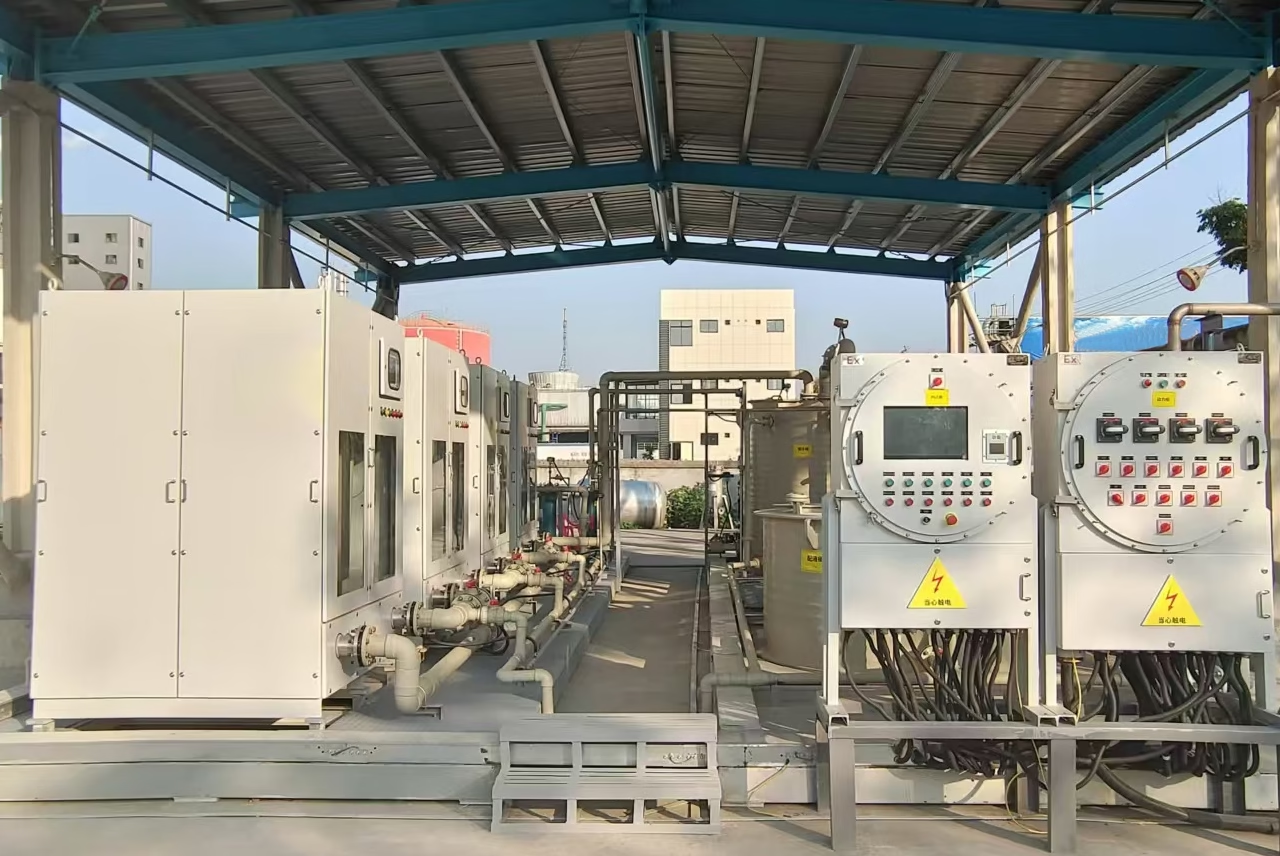
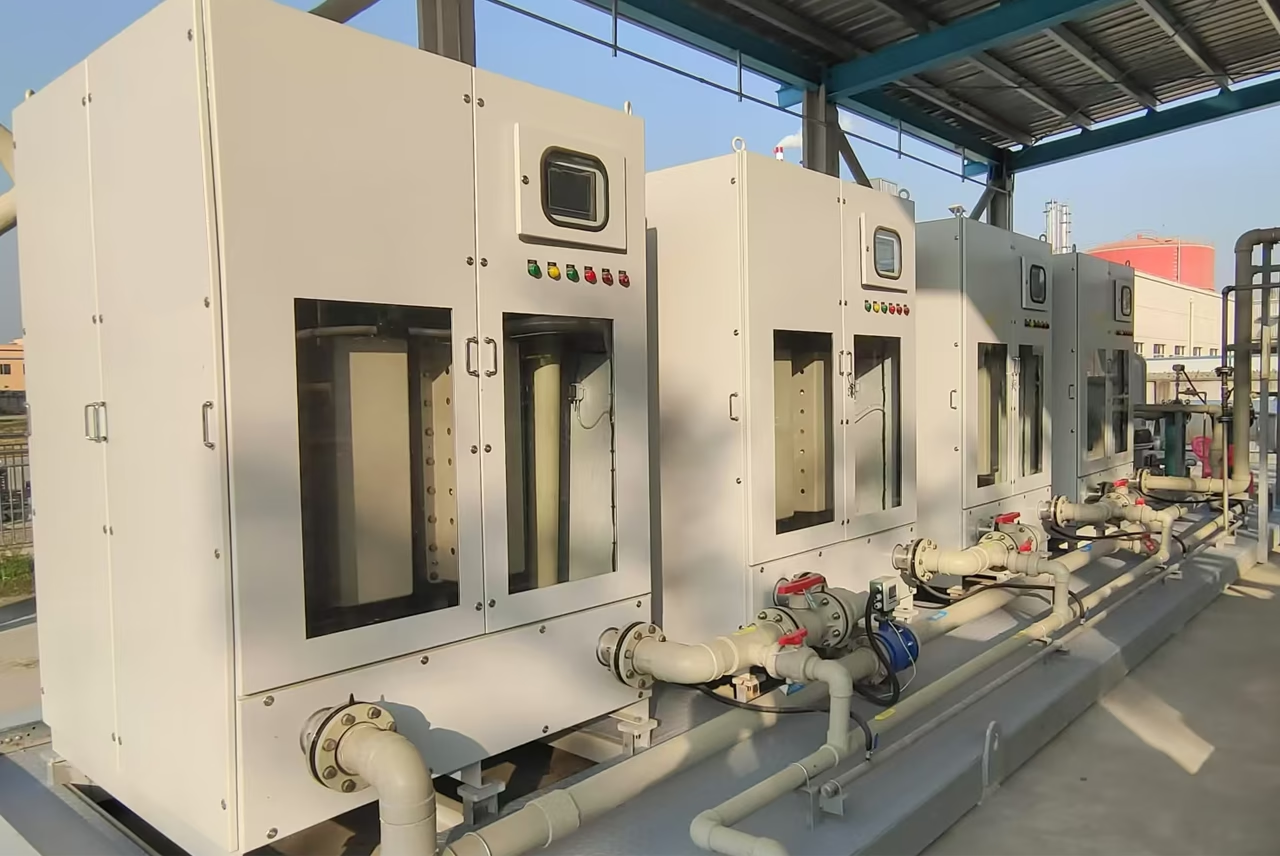
Equipment: The data from the pilot testing process is used to design and engineering the final commercial product for this specific refinery wastewater treatment project, our engineers analyzed the performance data and operational parameters to design skid-mount engineered electro oxidation wastewater treatment system for full scale operation, Electro oxidation wastewater treatment system Boromond MC088 is fabricated within our production facility, and designed to fit the limited spacing of the Sinopec Changling Branch’s site.
The electro oxidation wastewater treatment was relocated to the client’s site, installed, and operators were trained to ensure the system consistently meets the required treatment goals.
This specific systematic progression from conceptual design to pilot testing, as partial of our engineering design services remarkably slashed the technical and financial risk associated with deploying new wastewater treatment solutions, our engineers managed to design a constant operation/treatment cycle for this refinery wastewater treatment project after stimulating the treatment flow and analyzing data from the pre-treatment steps.
The electro oxidation wastewater treatment modular unit MC088 is re-engineered to treat refinery wastewater after primary and secondary treatment, and handling larger flow rate with multiple circular tanks, installed with filters before waste streams were pumped into the electro oxidation reactor with electrolytic cells, which is the main location electrochemical oxidaiton electrolysis of wastewater happened.
And electro oxidation module unit with boron doped diamond BDD electrode as the anodic catalyst electrode material at a surface area of 12 square meters, and cathodic electrode plates that are Titanium, with a floor area at 10 square meters, the electro oxidation wastewater treatment system were installed vertically, therefore we managed to finish all the designing, installation and operations of full scale electro oxidation treatment systems within a limited space within an existing wastewater treatment facility.
A real dream come true with this refinery wastewater treatment project, as we accomplished compact design, minizing footprints, and potential for existing treatment facility and future/upcoming facility expansions, settling after batch treatment, followed by discharging into next steps for further treatment processes.
All the BDD electrodes, titanium electrodes, electro oxidaiton reactors, and accessories are fabricated, and engineered by Boromond engineering team.
Contact Time within the electrochemical oxidation wastewater treatment system: 30–50 minutes total
Refinery wastewater treatment system design features:
Filter installed right after upstream effluents pumped into the electro oxidation system
Vertically installed electrolytic cells with advanced electrochemical oxidation module units
Automated controlling system
Automatic adjustment over major parameters
HMI-based real time monitoring and control system installed
5. Application of Electro Oxidation Processes & Commissioning with Sinopec Changling Refinery Wastewater Treatment Project
Skid-mounted electrochemical oxidation wastewater treatment modular unit installed without interrupting ongoing refinery operations
Integrated with existing equalization tank to hold effluents from upstream sedimentation, high performance filtration, and further treatment after electrochemical oxidation.
Start-up completed in 15 days
Optimization reduced chemical dosing by some 90%, chemicals added within the electro oxidation processes are Sodium sulfate/Na2SO4, Sodium chloride (NaCl).
6. Results & Performance of Electro Oxidation with Sinopec Changling Refinery Wastewater Treatment Project
Parameter Acetone Special Alcohol Special Phenol Special Ester Furfuryl Alcohol
COD Pior to Electro Oxidation ≤6000 ≤1000 ≤20000 ≤200000 ≤1000
CODcr After Electro Oxidation ≤600 ≤600 ≤600 ≤600 ≤600
*COD/CODcr unit at mg/L
*this result is the result of the electro oxidation treatment systems within a customized sequential multiple electro oxidation systems, does not reflect the final results of the sequential electro oxidation treatment of several batches, actual results might be affected by real time current density, upstream effluent compositions, flow rate, treatment durations and etc, in this case, please feel free to contact Boromond team members to figure out how our electro oxidation wastewater treatment products, solutions and datas from previous projects help you figure out how to treat complex refinery wastewater with your current and upcoming refinery wastewater treatment projects.
Additional Benefits of Electro Oxidation For Sinopec Changling Refinery Wastewater Treatment
Biological treatment efficiency increased by 72% after electro oxidation tertiary treatment.
This current electro oxidation are proven to improving the biodegradability of refinery wastewater to improving B/C ratio from a mere 0.1 to 0.3, by degrading complex, non-biodegradable organic compounds into smaller, less toxic, and more easily degradable organic compounds with smaller molecules, this team realized that there is a chance with introducing electro oxidaiton technology as a pre-treatment step to enhance the efficiency of subsequent biological treatment processes.
Electro oxdation can massively reduce a wide range of odors, odor-causing malodorous sulfur compounds like hydrogen sulfide and nitrogen compounds like ammonia, as shown in alteration of color of the blackish upstream effluents.
No or few sludge generate within the electro oxidation wastewater treatment processes, direct and indirect oxidation processes, that is direct mineralization or gradual degradation of complex organic compounds into less-complex organic compounds, and eventually inorganic matters, which means there is no bio-mass or masive sludge like traditional Fenton.
7. Client Testimonial of Electro Oxidation with Sinopec Changling Refinery Wastewater Treatment Project
“We were seeking innovative treatment technology to treat refinery wastewater with complex organic pollutants, and then we noticed that Boromond is offering electro oxidation processes, specialized in on-site treatment of organic wastewaters from industrial activities, their datas desmonstrated that they have dealt with wastewaters like our waste streams, their engineers are proven to be patient, professional, and there were months of testing and verfications before they emit a comprehensive solution for us, and it was proven to be efficient for this specific refinery wastewater treatment project.” –Sheng Liu, HSE Officer, Sinopec Changling Branch.
References, we are inspired by contents below, all the actional planning are down with enhancement of electro oxidation processes in mind:
Source 1: New Design Electro-Catalytic Digital Baffle Batch Oxidation Reactor for Organic Removal from Refinery Wastewater
Source 2: Electrochemical Treatment of Oil Refinery Wastewater for NH3-N And COD Removal from Sciencedirect
Source 3: Treatment of petroleum refinery wastewater by a combination of anodic oxidation with photocatalyst process, from Sciencedirect as well.