
Nullam dignissim, ante scelerisque the is euismod fermentum odio sem semper the is erat, a feugiat leo urna eget eros. Duis Aenean a imperdiet risus.
Nullam dignissim, ante scelerisque the is euismod fermentum odio sem semper the is erat, a feugiat leo urna eget eros. Duis Aenean a imperdiet risus.
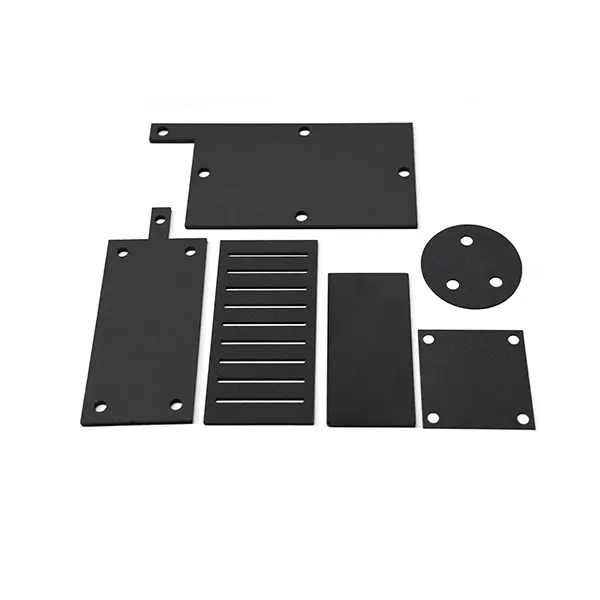
BDD electrode, a next gen electrode material made of boron-containing diamond, with exceptional properties and advantages such as outstanding conductivity, chemical stability, widest potential window, remarkablely low background current, superior electrochemical efficiency with expedited electro-generation of reactive oxidizing agents, BDD electrodes are usually fabricated via chemical vapor deposition (CVD).
BDD (boron-doped diamond) electrode plates are the next-generation anode material for electrochemical oxidation — a conductive diamond film deposited by chemical vapour deposition (CVD) on a silicon or niobium substrate. BDD combines the widest electrochemical potential window of any known electrode (up to 3.85 V), a high oxygen evolution potential of 2.5–2.9 V, remarkably low background current and outstanding chemical and mechanical stability, which makes it the anode of choice for hard-to-biodegrade organic wastewater.
At a GlanceBoron-doped diamond electrode plates are polycrystalline diamond films synthesised by chemical vapour deposition (CVD) and anchored to a conductive substrate — most commonly silicon (Si) or niobium (Nb). Boromond uses self-developed CVD coating equipment and deposits high-quality diamond coatings on large-scale HFCVD reactors: boron-containing and carbon-containing gases are cracked at high temperature in a low-pressure furnace, so that carbon and boron atoms deposit and form a film directly on the substrate surface. This enables mass production of BDD coatings whose specifications are systematically controlled through advanced metrology equipment.
Diamond itself has high hardness, high thermal conductivity, superior stability, corrosion resistance and good biocompatibility. Pure diamond is non-conductive, but boron doping turns the film into a semiconductor — or even a low-temperature superconductor, depending on the boron content — and gives the electrode a set of electrochemical characteristics that no metal anode can match:
An electrochemical potential window of up to 3.85 V — combined with a high oxygen evolution potential (2.5–2.9 V) and a low hydrogen evolution potential (≥ −1.2 V) — directs electrical energy into generating hydroxyl radicals instead of parasitic oxygen evolution.
The non-active BDD surface produces unmediated hydroxyl radicals that oxidise pollutants by both direct electron transfer and indirect mediated oxidation, mineralising refractory organics all the way to CO₂ and H₂O.
The chemically inert diamond matrix resists fouling, polymeric filming and mineral scaling, and stays stable in strong acids, alkaline media, alcohols, oils, complexing agents and aromatics, at high temperature and in heterogeneous media.
BDD resistivity is controlled between 0.1 and 100 mΩ·cm; the resulting low background and capacitive currents maximise current efficiency and cut the energy consumed per kilogram of COD destroyed. As an inert anode, the plate is not consumed in service.
Organic molecules adsorbed onto the diamond surface transfer electrons directly to the anode. This pathway needs no catalyst layer — the diamond itself is the electrode — which is why BDD is classed as a non-active anode with an exceptionally high oxygen evolution potential.
Hydroxyl radicals (•OH) generated at the boundary layer, together with secondary oxidants — hydrogen peroxide (H₂O₂), ozone (O₃), active chlorine species (Cl₂, HOCl, OCl−) and sulfate radicals (SO₄·−) when background salts are present — break organics down through consecutive oxidation steps to full mineralisation.
Total mineralisation pathway: organic pollutants are oxidised to intermediates and then to CO₂ and H₂O. BDD electro-oxidation does not generate by-products in the form of sludge — pollutants leave as gases such as CO₂, so there is no phase transfer, no spent adsorbent and no hazardous residue to dispose of.
| Parameter | Specification |
|---|---|
| Substrate | Silicon (Si) or niobium (Nb) |
| Electrode shape | Rectangle / Disk / Plate / Mesh / Custom |
| Electrode dimensions | 2 mm – 700 mm |
| Substrate thickness | 0.5 – 6 mm |
| BDD coating thickness | <10 µm |
| Coating side | Single side / Double sides |
| Boron concentration | 1000 – 4000 ppm |
| BDD resistivity | 0.1 – 100 mΩ·cm |
| Electrochemical potential window | ≤3.85 V |
| Oxygen evolution potential | 2.5 – 2.9 V |
| Hydrogen evolution potential | ≥ −1.2 V |
| Working current density | <100 mA/cm² |
| Service life | ≥3 years, depending on working conditions |
| Chemical stability | Stable in harsh media — strong acids, alkaline media, alcohols, oils, complexing agents and aromatics — at high temperature and in heterogeneous media |
Custom formats are available as standard: share your reactor geometry and operating parameters, and we will match substrate, thickness, coating side and boron doping to your current density and mass-transfer requirements.
Iron-carbon microelectrolysis, Fenton and ozone are the three classic advanced oxidation routes for refractory organics. All of them work — but each carries a reagent bill, a sludge bill or a gas-handling burden. BDD electro-oxidation replaces the reagent with electrons:
| Parameter | Iron-Carbon Microelectrolysis | Fenton | Ozone | BDD Electrolysis |
|---|---|---|---|---|
| Reactants / reagents | Iron-carbon ball | Hydrogen peroxide, ferrous ion, concentrated sulfuric acid | On-site preparation of liquid oxygen | Electrons — no reagent consumed |
| Oxidation potential | ≤1.23 V | ≤2.07 V | ≤1.3 V | 2.5–2.9 V |
| Structure & control | Simple structure, convenient operation and maintenance | Relatively complex, with multiple independent reaction sections | Complex — dedicated ozone generator, cooling system and degassing system with sophisticated control | Integrated, modular design supporting fully automatic, unattended operation |
| Reaction products | High sludge yield and high treatment cost | High sludge yield and high treatment cost | Usually combined with biochemical treatment, accompanied by biochemical sludge production | No by-products — pollutants discharge as gases such as CO₂ |
| Operating conditions / safety | No special requirements | Strong acid, strong alkali and high oxidants — structural anti-corrosion and personal protection required | High concentration and strong corrosiveness — equipment anti-corrosion and personnel protection required | No special requirements |
| Floor area | Small footprint | Large footprint | Relatively large footprint | Small footprint |
| Application scope | Low-concentration wastewater pretreatment | Pretreatment of medium- and low-concentration wastewater | Advanced treatment of medium- and low-concentration wastewater | Pretreatment, main treatment and advanced treatment of high-salinity & high-COD wastewater |
Comparison and figures as published in Boromond's official product catalogue. Oxidation potential is stated for the reactive species each process relies on.
| Parameter | BDD Electrode Plate | MMO / DSA | Platinum (Pt) | Lead Dioxide (PbO₂) |
|---|---|---|---|---|
| Oxygen evolution potential | 2.5–2.9 V | ~1.6–1.8 V | ~1.6 V | 1.8–2.2 V |
| Oxidation mechanism | Non-active — unmediated •OH generated in bulk | Active — surface-bound oxidants | Active, selective (PtO formation) | Active — surface adsorption |
| Potential window | Widest — up to 3.85 V | Narrow | Narrow | Narrow |
| Background current | Lowest | Higher | Higher | Higher |
| Fouling & corrosion resistance | High — inert diamond matrix resists filming, scaling and strong acid/alkali attack; anode not consumed | Moderate | Prone to passivation | Fouls when organics or scale impact the lead surface |
| Oxidation outcome | Full mineralisation to CO₂ and H₂O — no hazardous sludge | Partial, selective | Partial — suited to simple disinfection | Restrained, linear redox process |
Oxygen evolution potentials quoted for MMO/DSA, platinum and lead dioxide are typical published figures given for reference; BDD values follow Boromond's official electrode specification.
Need help selecting between silicon and niobium BDD plates for your specific wastewater matrix, current density and reactor design? Our engineers match the electrode format to your mass-transfer and operating requirements.
BDD electro-oxidation is rarely a stand-alone box on a P&ID. It is a building block that bolts onto the process you already run — ahead of biology to break the refractory fraction, behind membrane concentration to polish the concentrate, or as the whole treatment step where salinity rules biology out. Typical configurations from Boromond projects:
High-rate clarifier + BDD · DAF + BDD · ultra-fine bubble aeration + BDD. Raise BOD/COD ratio and strip toxic or inhibitory organics before the biological stage.
BDD + AAO · BDD + UASB · BDD or BDD + MVR. Carry the COD load directly, where salinity, toxicity or non-biodegradability makes a biological main stage unworkable.
Still residue + BDD · NF/RO concentrate + BDD · stand-alone BDD. Destroy the organics that concentrate up in MVR mother liquor, RO brine and evaporation still residue.
AAO + BDD · NF/RO outlet + BDD. Final polish to meet discharge or reuse limits when biological effluent still carries refractory COD.
Because the reaction reagent is simply the electron, the operating cost scales with the COD you actually destroy — not with the tonnes of reagent you dose. BDD units run at ambient temperature and pressure, occupy a small footprint, tolerate load swings by regulating voltage and current, and are built as integrated, modular skids that support fully automatic, unattended operation.