
- 1 September 2026
Environmental Water Sample Degradation Data Report
1. Experimental Principle
This experiment uses the principle of electrochemical catalytic oxidation. It uses the BDD electrode as the main reaction device to finally convert the organic matter in the water sample into CO2 and H2O, nitrate nitrogen and ammonia nitrogen into nitrogen.
2. Electrode Configuration
| Component | Specification | Detail |
|---|---|---|
| Anode | 2 BDD electrodes | Single-crystal silicon substrate, surface area 200 cm² per plate |
| Cathode | 3 titanium sheets | — |
| Plate spacing | 3 mm | — |
3. Experimental Operation
Sample. Take 1 L of the water sample in the beaker.
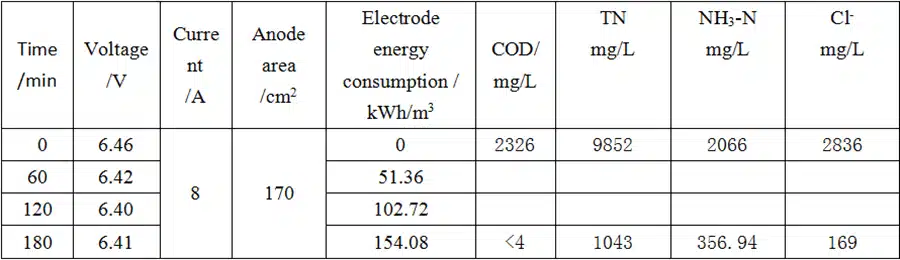
Setup. Put the sample into the BDD electrode module (the actual anode area is 170 cm², plate spacing 3 mm).
Energize. Connect the power supply, adjust the current intensity to 8 A, the duty cycle to 80%, the frequency to 4000 Hz, and the degradation begins.
Monitor. During the degradation process, stir the water sample with a magnetic stirrer to make it uniform. Take samples at regular intervals, record current and voltage values, and measure temperature and pH.
4. Experimental Phenomenon
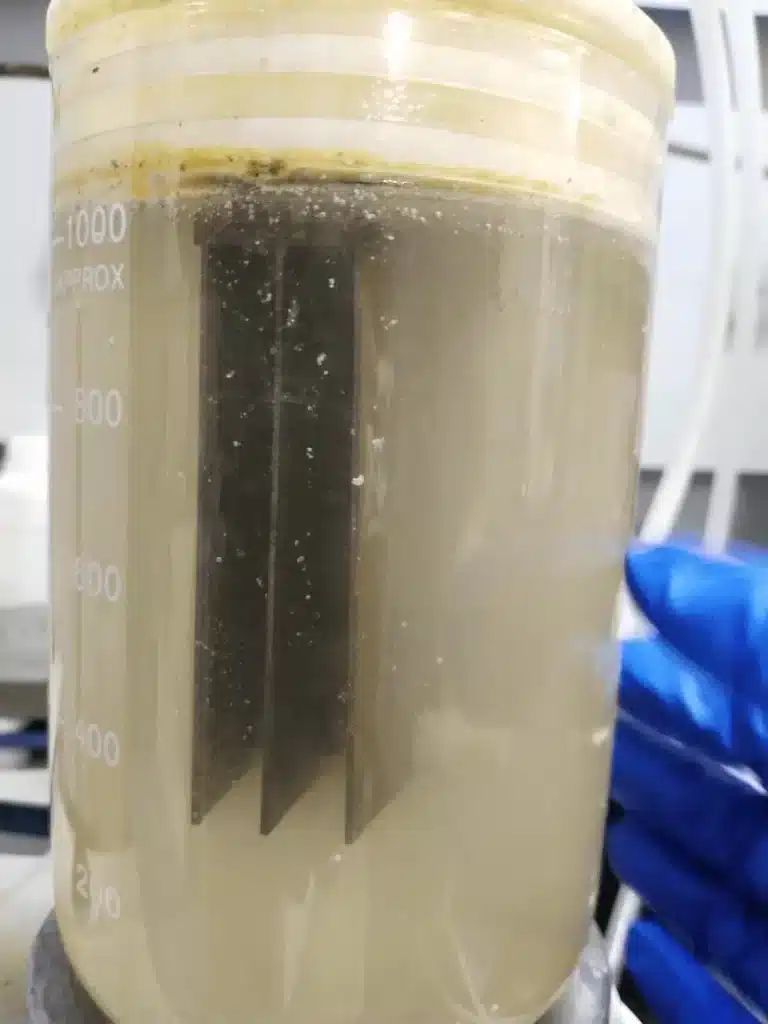
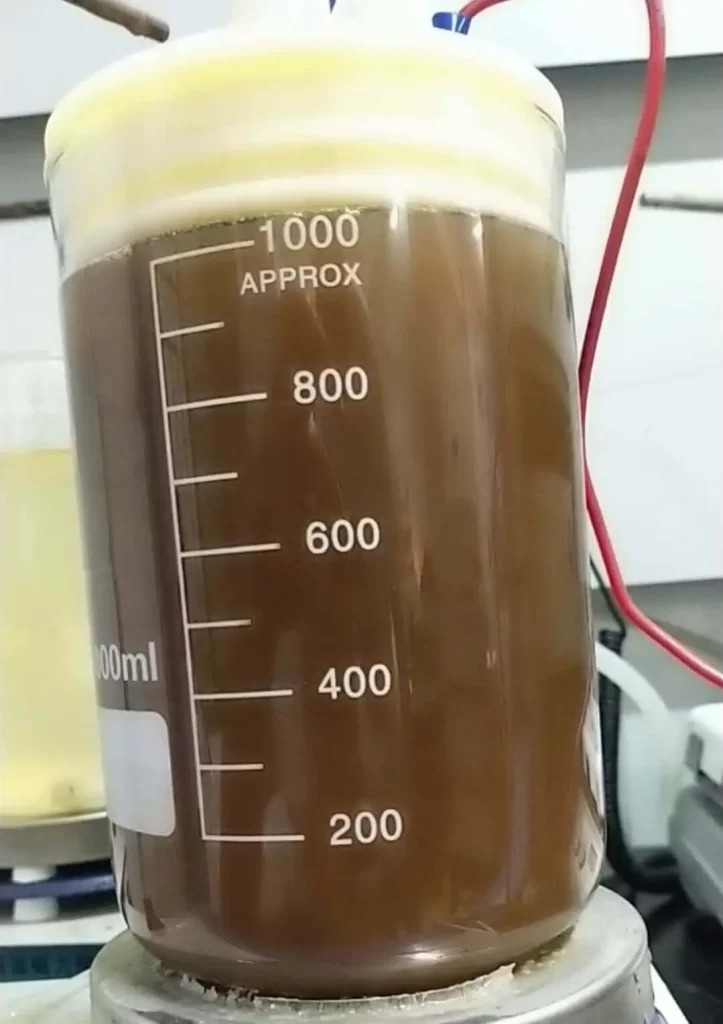
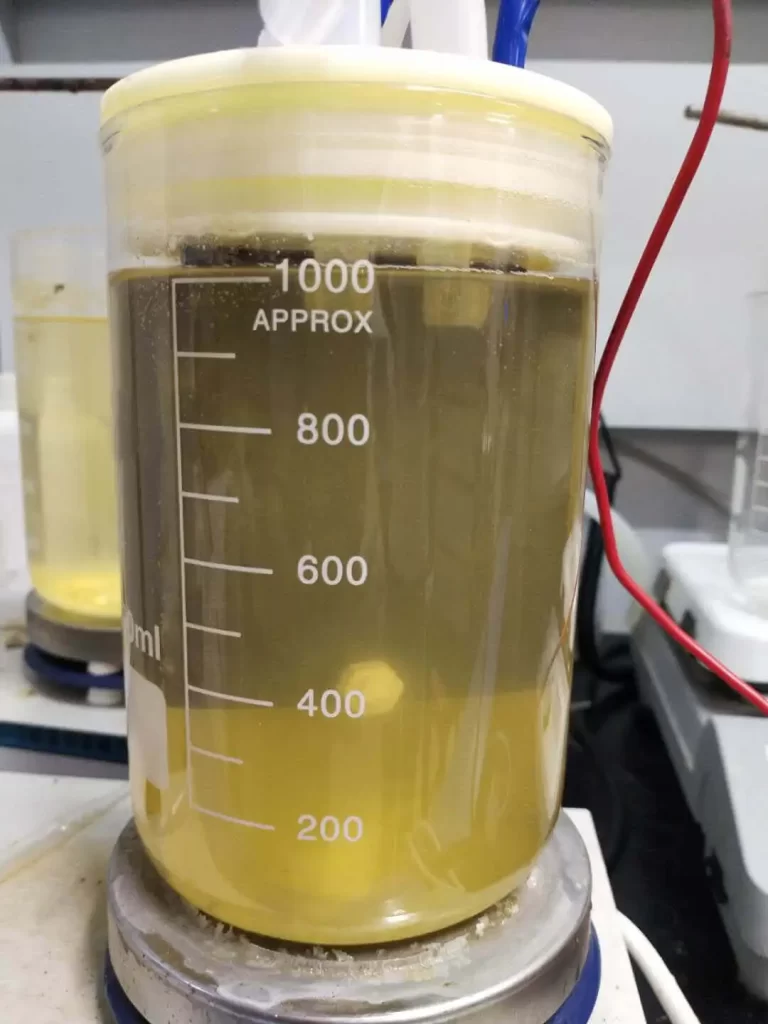
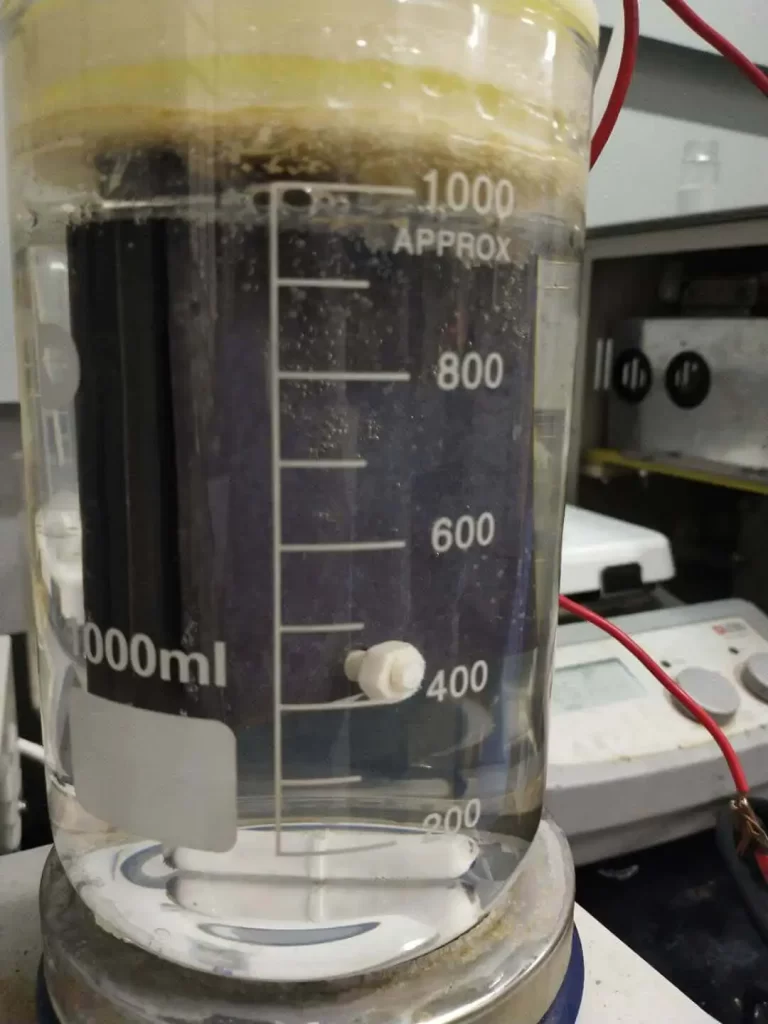
Due to some cases and data involving industry privacy. We have discussed rigorously and have hidden many cases and data reports. If you do not find the relevant industry data here and want the relevant reference data. You can contact us directly, and we will filter the reference data you need according to your industry as appropriate. ——– Boromond Team