
- 1 September 2026
Boromond team presents a brand new case study toward palm oil mill effluent (POME) wastewater treatment, demonstrating the challenges from the palm oil processing industry, the BDD technology we applied to tackle them, the experimental data, and the final results.
1. Characteristics of Palm Oil Wastewater
Palm oil wastewater mainly comes from cooking, pressing, separating and refining processes in palm oil production. It carries high loads of suspended solids, organic matter and oil, and typically presents a strong sour odor and dark brown to black color.
High Suspended Solids
Fibers, pulp fragments and fruit-pit particles from pressing and separation stages.
Dark Brown / Black Color
Caused by high concentrations of organic matter and suspended solids.
Strong Sour Odor
From organic decomposition and anaerobic fermentation gases.
High Organic Load
Main components: carbohydrates, proteins and fats.
High Oil & Grease
Released from the pulp and pit of palm fruit.
| Parameter | Typical Range | Note |
|---|---|---|
| COD | 15,000 – 100,000 mg/L | Very high organic strength |
| BOD | 10,000 – 50,000 mg/L | Highly biodegradable fraction |
| pH | 3.4 – 5.2 | Acidic — requires corrosion-resistant materials |
2. Why BDD Electrode — Technology Selection
High Organic Load Adaptability
Hydroxyl radicals generated at the BDD surface effectively degrade high concentrations of fats, proteins and carbohydrates.
Advanced (Deep) Treatment
Mineralizes complex organics completely into CO2 and H2O for high-quality effluent.
Acid Resistance
High chemical stability makes BDD well-suited to the acidic pH 3.4–5.2 environment for long-term stable operation.
No Harmful By-products
Unlike chlorination, BDD oxidation produces no chlorinated by-products (e.g. chloroform), avoiding secondary pollution.
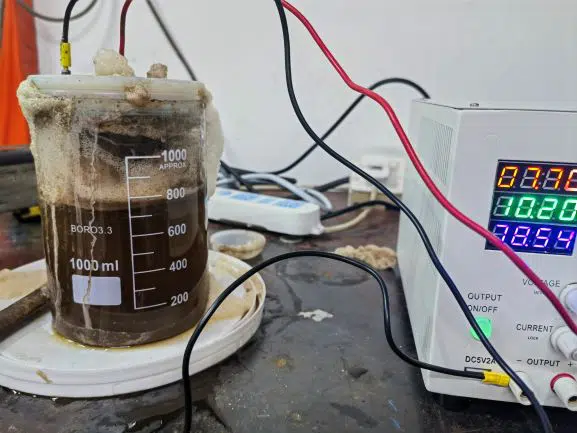
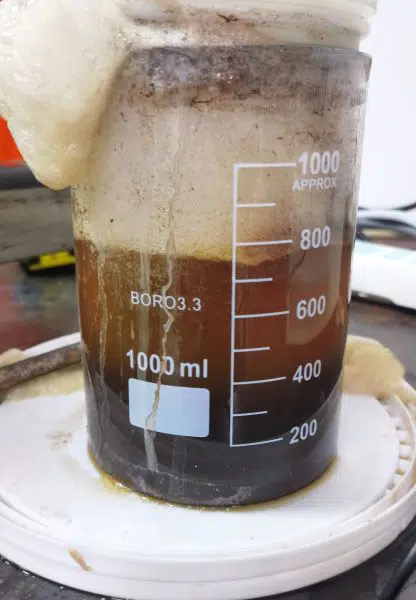
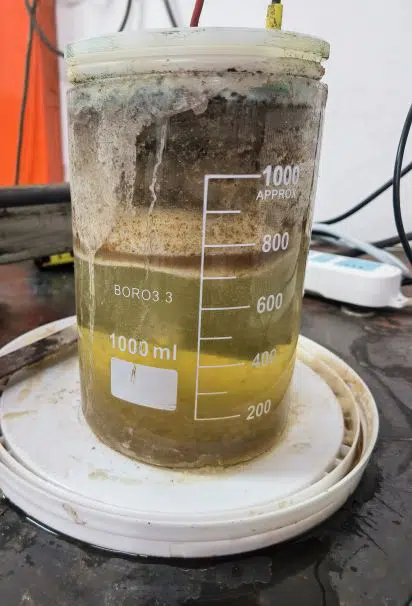
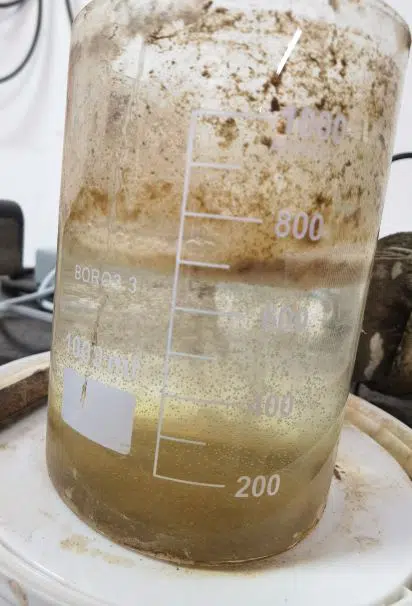
3. Experiment Timeline — Water Sample Changes
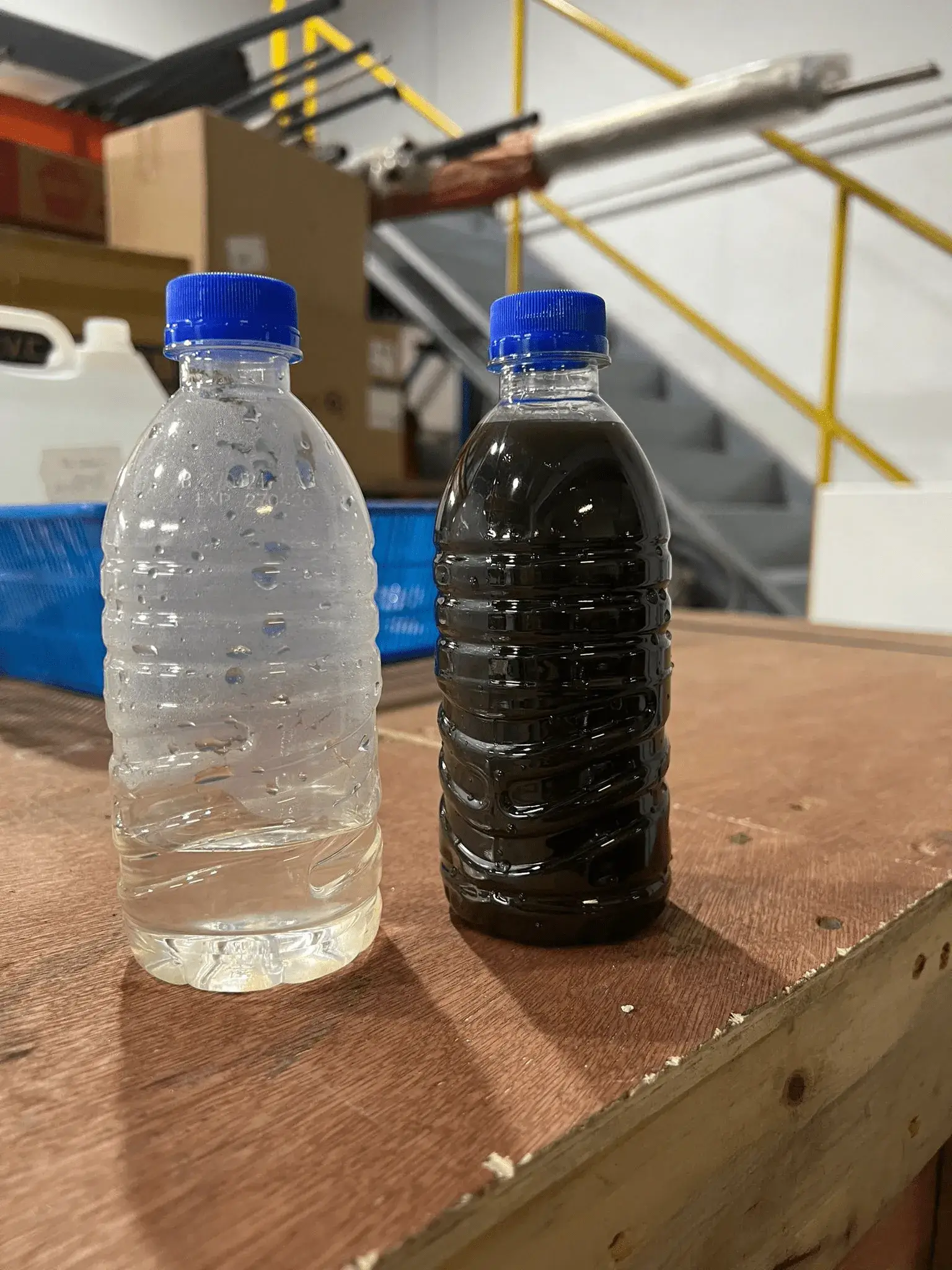
4. Experimental Results & Discussion
| Parameter | Value |
|---|---|
| BDD Anode Area | 150 cm² |
| Water Volume | 1 L |
| Initial COD | 4,090 mg/L |
| COD After 2 Hours | 534 mg/L |
| Removal Rate | (4090 − 534) / 4090 = 86.94% |
Overall Evaluation
- Excellent treatment effect — significantly reduces COD, BOD and oil content.
- Stable operation — pilot equipment runs without obvious technical failure, suitable for high-concentration organic wastewater.
- Environmentally friendly — no harmful by-products generated during the process.
Existing problems & room for improvement
As a small pilot running faster tests, the pretreatment was not filtered clean, producing a large amount of foam that affected BDD work efficiency. In addition, the system was not stirred by an electric mixer. By increasing the current density and adding stirring, the COD content is expected to reach 100 mg/L within half an hour, meeting the local discharge standards.
5. Conclusions & Scale-up Outlook
- High-efficiency degradation — organic pollutants in palm oil wastewater are effectively degraded, and the water quality after treatment is significantly improved.
- Corrosion resistance — the equipment adapts well to the acidic characteristics of palm oil wastewater.
- Low energy consumption — high energy conversion efficiency and good economic performance.
Feasibility of large-scale application: Pilot and demonstration projects will be carried out to verify the feasibility and treatment effect of large-scale application of the technology in palm oil wastewater. Successes — high efficiency and stability of BDD successfully verified, with significant environmental benefits. Challenge — parameter optimization needs more test data to ensure treatment effect under different conditions.
Due to some cases and data involving industry privacy. We have discussed rigorously and have hidden many cases and data reports. If you do not find the relevant industry data here and want the relevant reference data. You can contact us directly, and we will filter the reference data you need according to your industry as appropriate. ——– Boromond Team