
- 1 September 2026
Challenges of landfill leachate treatment from municipal solid waste landfills contains a mix of contaminants that pose risks to the environment if untreated.
Complex composition of landfill leachate includes
High organic matter
High concentrations of organic matter, measured as biological oxygen demand (BOD) and chemical oxygen demand (COD). The organics are biodegradable but also include bio-refractory and toxic compounds.
Strong color
Strong color from humic and fulvic acids that form as waste decomposes.
Heavy metals
Heavy metals like lead, nickel, zinc and copper, which leach from disposed materials and are hazardous to ecosystems and public health.
High ammonia
High ammonia levels, often measured as total Kjeldahl nitrogen (TKN), which can reduce dissolved oxygen in receiving waters, harming aquatic life.
Chlorides
Chlorides from disposed plastics, consumer waste, etc. Chloride causes salinization of groundwater and surface water at elevated levels.
Other contaminants
Additional contaminants like sulfides, phosphates, pathogens, microplastics, pharmaceuticals and volatile organics. The mix and concentrations vary significantly between landfill sites based on the types of waste accepted.
Treatment challenges include
This complex matrix of pollutants with high variability between leachate sources poses challenges for treatment, including:
Multi-stage treatment required
No single process effectively removes all contaminants. Multiple stages using different techniques are required, increasing costs.
Bio-refractory organics
Bio-refractory and toxic organics are difficult to treat through biological means alone. Physico-chemical processes are also needed.
Heavy metal removal
Heavy metals require specialized removal processes beyond those for organics and nutrients. Technologies like precipitation, ion exchange, and membrane filtration are often used.
High variability
High variability requires flexibility to adapt treatment types and intensities to leachate composition. A fixed approach may not suit all cases.
Large volumes
Large volumes of wastewater generated at major sites require high-throughput, low-cost treatment for sustainability. Simple or low-maintenance systems have advantages.
Leachate from municipal landfills has diverse and complex pollution issues with high variability between sites. This presents significant challenges for effective, low-cost and sustainable treatment.
A combination of biological, chemical and physical processes are typically needed to remove the array of contaminants to levels acceptable for discharge or reuse. Treatment must also be tailored based on monitoring the waste inputs and leachate composition for the best outcomes from an environmental and economic perspective.
Boron doped diamond was introduced to accompolish landfill leachate treatment with massive degradation of NH3-N, TN and COD.
According to the testing results of Boromond laboratory and field testing result at the landfill treatment site in Suzhou, China.
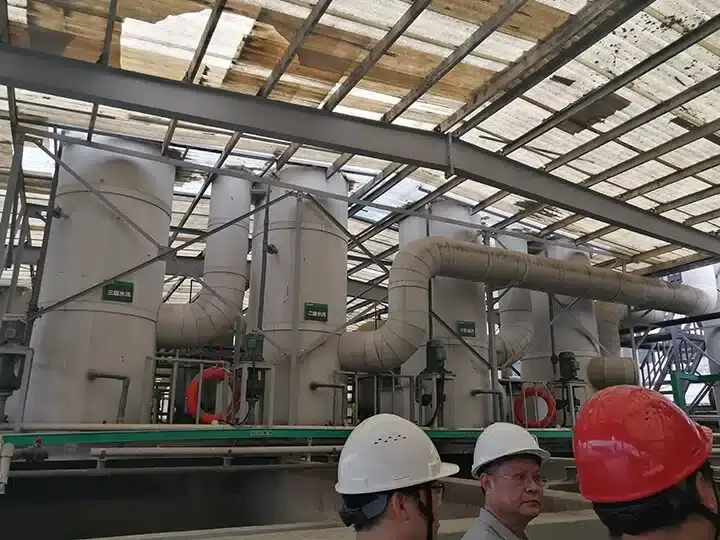
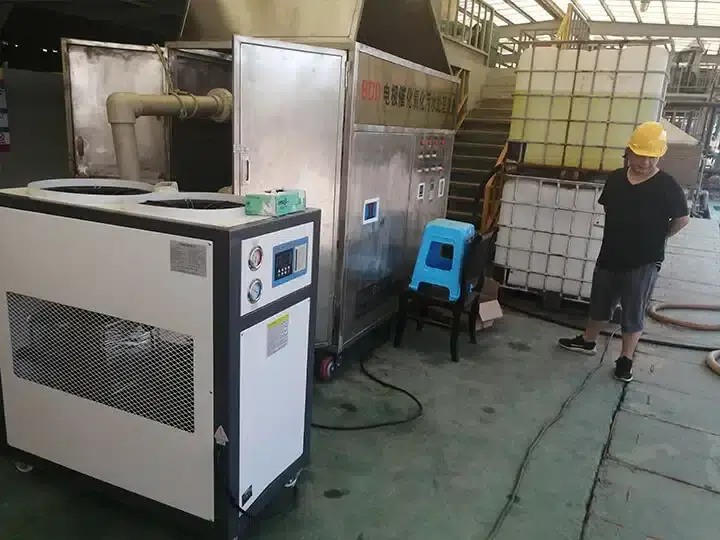
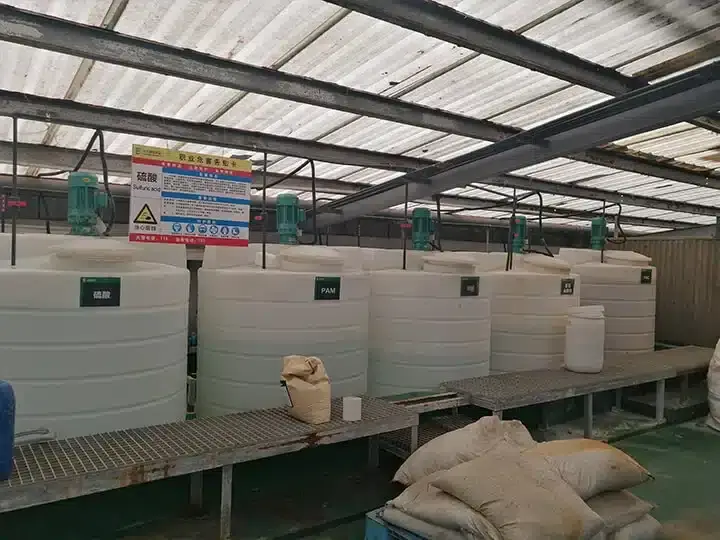
Degradation data of Suzhou landfill leachate
1. Experimental principle
This experiment uses the principle of electrochemical catalytic oxidation, with a BDD electrode as the core reaction device, and finally converts the organic matter in the water sample into CO2 and H2O.
2. Electrode
| Component | Specification |
|---|---|
| 2.1 Anode | Two BDD electrodes with a single crystal silicon substrate, with a surface area of 200 cm2. |
| 2.2 Cathode | Three titanium sheets. |
3. Experimental operation
Take 1 L of water sample in the beaker.
Put the BDD electrode module (actual anode utilization area 140 cm2, cathode/anode plate area ratio 2:1).
Connect the power supply, adjust current to 8 A, duty cycle 80%, frequency 4000 Hz; start to degrade. The sample is stirred with a magnetic stirrer to keep uniform.
Take samples at regular intervals, record the current and voltage, and measure the temperature and pH.
4. Experimental phenomenon
The original water sample is dark brown, turbid, and has a strong odor; more foam is produced during the degradation process, and a small amount of brown precipitation is produced; after degradation, the water sample becomes clear, and the pH value slightly increases.
5. Results and analysis
| time /h |
voltage /V |
current /A |
BDD area /cm2 |
consumption /kWh/m3 |
NH3-N /mg/L |
TN /mg/L |
COD /mg/L |
temp /℃ |
pH |
|---|---|---|---|---|---|---|---|---|---|
| 0 | 5.77 | 8 | 140 | 0 | 2800 | — | 56700 | — | 5-6 |
| 4 | 5.5 | 176 | 2050 | — | 42550 | 57 | 5-6 | ||
| 8 | 5.5 | 352 | 1310 | — | 33700 | 57 | 6-7 | ||
| 12 | 5.5 | 528 | 647.5 | 1287 | 13100 | 57 | 7-8 | ||
| 14 | 5.5 | 616 | — | 775 | 7070 | 57 | 7-8 | ||
| 16 | 5.5 | 704 | 34 | 375 | 3660 | 57 | 7-8 | ||
| 17 | 5.5 | 748 | — | 230 | 960 | 57 | 7-8 | ||
| 18 | 5.5 | 792 | — | — | 390 | 57 | 7-8 |

Due to some cases and data involving industry privacy. We have discussed rigorously and have hidden many cases and data reports. If you do not find the relevant industry data here and want the relevant reference data. You can contact us directly, and we will filter the reference data you need according to your industry as appropriate. ——– Boromond Team